
Imaginings
Cultivating Imagination for Possible Futures

Imagination is one of our most powerful tools for personal and collective liberation. It allows us to dream of worlds beyond the confines of our current realities, to see possibilities that have not yet been realized, and to begin the work of transforming ourselves and our communities. Imagination is not frivolous—it is essential. As Ruha Benjamin writes in Imagination: A Manifesto, "Imagination is the engine of social change." It is through the act of imagining that we can dismantle oppressive systems and dream up equitable, just futures.
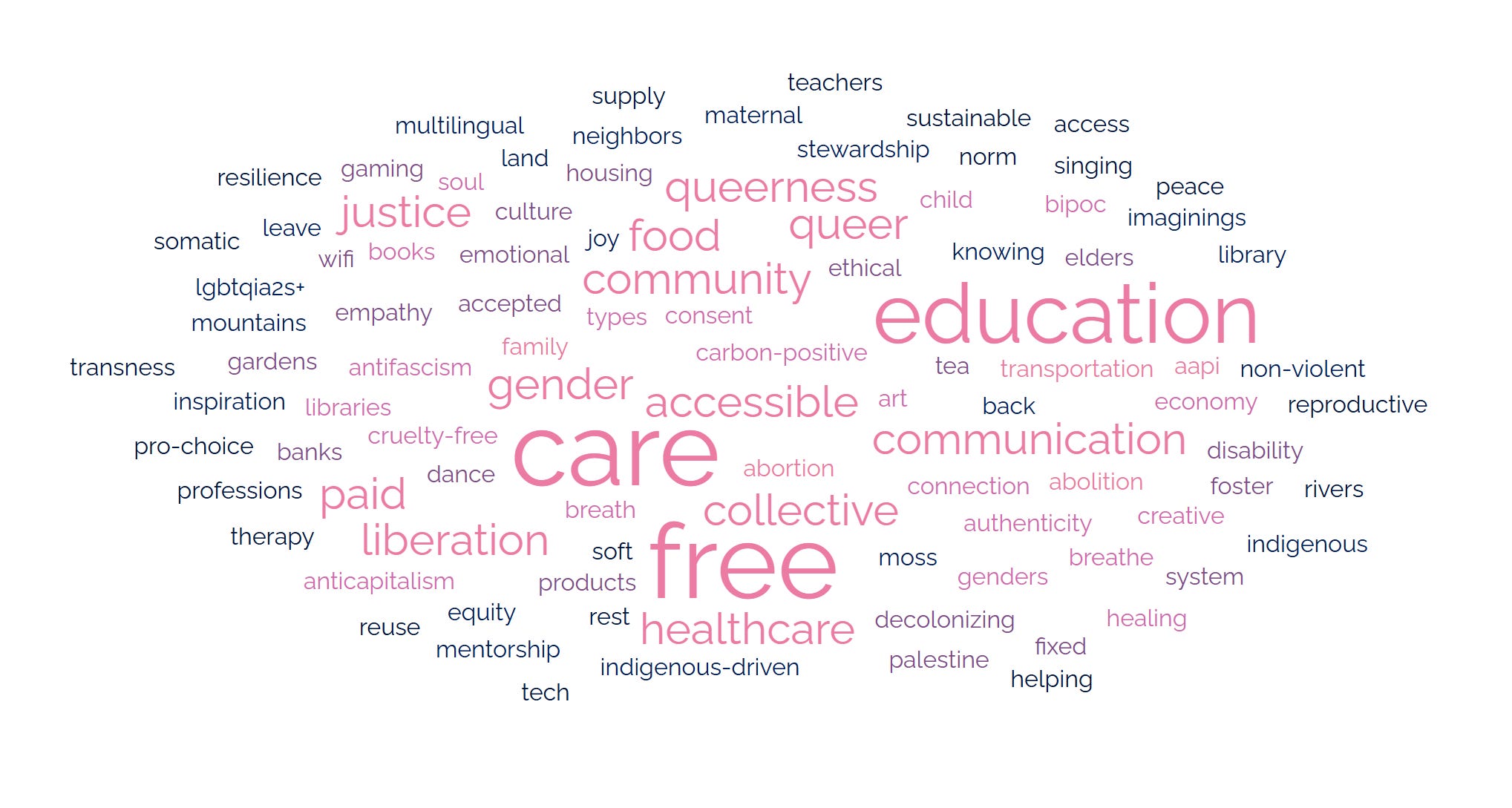
Key Notes
Imagination is a practice for liberation: It allows us to envision and create futures beyond the limitations of current systems.
Imagination is not escapism: It is deeply rooted in understanding the present and envisioning pathways to justice.
Imagination fuels resilience: By connecting to joy, curiosity, and hope, we sustain ourselves and our communities in the work of transformation.
Collaboration amplifies imagination: Collective dreaming helps us weave individual longings into shared visions for a better world.
A Brief Glossary
The words imagination, imagine, and imagining reflect different dimensions of this transformative process.
Imagination is the foundational capacity to envision futures beyond the limitations of current systems—it's the wellspring of creativity and possibility that drives liberation work.
Imagine, as a verb, calls us into action: it is the intentional practice of crafting visions for more just and equitable worlds.
As a verb, imagining captures the dynamic, ongoing act of creating these visions, emphasizing that change is an active, participatory process.
Most commonly I use imagining as a noun, which represents the collective and individual processes of dreaming, questioning, and exploring new pathways; it’s the work of holding space for what could be.
Together, these terms remind us that social change begins in the mind, grows in collaboration, and takes shape through the persistent, creative efforts of individuals and communities.
Why Imagine?
Imagination helps us break free from the narratives we’ve been handed. It’s a revolutionary act to envision a world that doesn't yet exist, especially when living in systems designed to limit our capacity to dream. Octavia Butler reminds us that social change is science fiction; it begins in the realm of the imagined before it is made real. By engaging in the practice of imagining, we become architects of the futures we long for.
Imagination also allows us to reconnect with joy, curiosity, and hope—forces that sustain movements for justice and nourish our spirits. It helps us ask the question: What if? What if the world were built on care instead of domination? What if abundance, not scarcity, shaped how we relate to one another?
Understanding Where We Are
Imagination begins with clarity about the present. To dream up what’s next, we have to understand where we stand now. This includes recognizing the systems of oppression that constrain us and understanding our role within them. It also means acknowledging our own longings, our capacity for change, and the histories that have brought us here. Authors like Alicia Garza and adrienne maree brown remind us that imagination is not escapism—it is rooted in the world as it is, with all its complexities.
Understanding where we are also means considering what Staci Haines calls the sites of shaping—the interconnected layers of our ecosystem that influence who we are and how we move through the world. These include the self, family (biological or chosen), community, the larger world, social and political forces, and our relationships with nature and spirit.
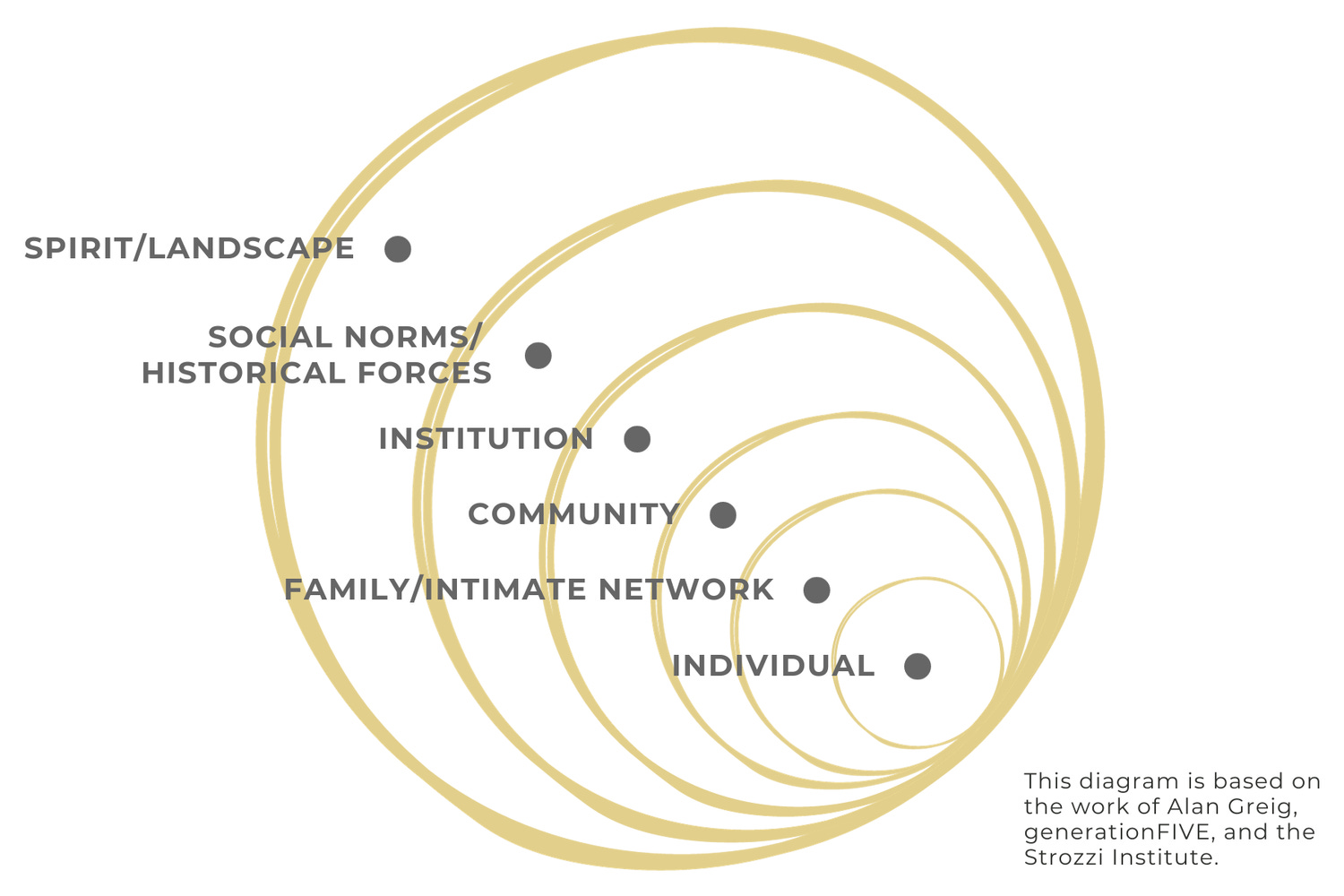
To fully understand our place within these layers, we must cultivate awareness of how they intersect and shape us. This requires a practice of titration or pendulation, moving in and out of focused attention to avoid overwhelm and burnout. With this full awareness, we unlock the possibility of agency—awareness allows us to choose how we respond, where we act, and what we imagine for ourselves and our collective future.
Connecting With Our Longings
Imagination thrives when we connect deeply with our desires for a different world. With awareness of the systems that shape us comes the power to choose, but knowing where to begin requires us to turn inward and ask: What do we truly long for? It is through this reflection that we uncover the seeds of what to imagine.
What do you long for? Freedom, connection, safety, creativity, love? These longings guide the visions we create. The act of imagining helps us articulate our dreams and bring them into sharper focus. By tapping into them, we can build futures that honor our needs and the needs of others.
Imagining and longing are deeply personal yet inherently collective processes. Just as shaping our lives and the world requires both individual reflection and collective action, the work of imagining begins within us and extends outward into our communities. Individually, we connect with our unique desires and dreams, exploring what freedom, connection, or creativity means to us personally. Collectively, we weave these longings together, finding shared values and visions that amplify our efforts. This duality—honoring our individual truths while building toward collective liberation—reflects the interdependence at the heart of social change. It reminds us that our personal imaginings are threads in a larger tapestry, shaped and strengthened by the community we dream alongside.
Imagination as a Muscle
Imagination is a practice. Like any skill, it grows with time and intention. Engaging in creative activities, storytelling, and dreaming with others are ways to strengthen this muscle. Collective imagining—what adrienne maree brown calls "visionary fiction"—is particularly powerful. It helps us co-create worlds that reflect shared values, weaving together our individual dreams into collective possibilities.
Practicing imagination can be as simple as setting aside time to dream intentionally. Start by finding a quiet space where you feel safe and grounded. Close your eyes and ask yourself: What would the world look like if it fully honored my deepest longings? Let your mind explore freely, without judgment or limitation. You can also try journaling, creating art, or engaging in storytelling with others to bring your visions to life. For a collective practice, gather with friends or community members and imagine a future together, sharing ideas and building on each other’s dreams. These small acts of imagining not only strengthen the muscle but also remind us that dreaming is a powerful step toward transformation.

Somatic/Embodied Practice for Imagining
Practicing imagination isn’t just a mental exercise—for it to stick, a practice needs to be a repetitive, embodied action that aligns with our values and engages our whole being. When we include our bodies in the process, we tap into a deeper wisdom, one that holds our experiences, desires, and capacity for transformation. The embodied part of this work is crucial because our bodies often carry the residue of trauma, oppression, and stress, which can block our ability to dream expansively. By integrating movement, breath, and sensation into imagining, we create space to envision and feel what liberation might truly mean.
Our bodies hold wisdom that is vital for the practice of imagining. Trauma, oppression, and stress can block our ability to dream expansively, but somatic practices can help us reconnect with our capacity to envision and create. Grounding exercises, movement, and breathwork can open pathways for imagination, allowing us to embody the futures we want to build. When we move with intention, we remind ourselves that transformation begins within.
“I believe our imaginations—particularly the parts of our imaginations that hold what we most desire, what brings us pleasure, what makes us scream yes—are where we must seed the future, turn toward justice and liberation, and reprogram ourselves to desire sexually and erotically empowered lives.”
― Adrienne Maree Brown, Pleasure Activism: The Politics of Feeling Good
Practice Offering
Find a quiet, comfortable space where you can connect with your body. Close your eyes or soften your gaze, and take a few deep, grounding breaths. Ask yourself: What would the world look like and feel like if we achieved liberation for all peoples? If every person could express themselves authentically and live in alignment with their dreams and values? Let this vision emerge naturally, without forcing it. Notice what arises—not just in your mind, but in your body. Are there sensations, movements, or emotions that come up? Allow yourself to explore these sensations as part of the imagining process. This practice helps you engage your full self—mind, body, and spirit—in the act of creating a better world.
Building Visions
Imagination is not just about envisioning; it is about building. How do we take the dreams we have and begin to bring them to life? This requires collaboration, commitment, and courage. It’s about testing new ways of being, learning from mistakes, and continuously adapting our visions as we grow. It’s about building the kind of relationships and communities that make our dreams possible.
Get Started
Imagination invites us to explore your unique role in creating the futures you long for. At LiberationWeavers Collective, I’m dedicated to fostering imagination, connection, and transformative action. This work is rooted in the belief that imagining new possibilities is essential for creating a just and equitable world—and that we can only do this work in relationship with ourselves and each other.
Through one-on-one sessions, we’ll uncover your deepest longings—both in your mind and body—connect with the wholeness of who you are, and clarify your core values. Together, we’ll envision the world you want to help build, map out your role in social change work, and create actionable steps to align your dreams with action. The process is collaborative, tailored to your needs, and designed to help you move toward clarity, empowerment, and alignment.
Curious about working with me? Ready to begin? Email me at river@liberationweavers.com to set up a consultation or get more information and take the first step toward a transformative, long-term journey. Together, we can weave a future that reflects your dreams and contributes to collective liberation.
Resources from Resource Goblin:
The Politics of Trauma: Somatics, Healing, and Social Justice by Staci K. Haines
The Purpose of Power: How We Come Together When We Fall Apart by Alicia Garza
If you’re interested in this work and want more resources, please reach out to me!